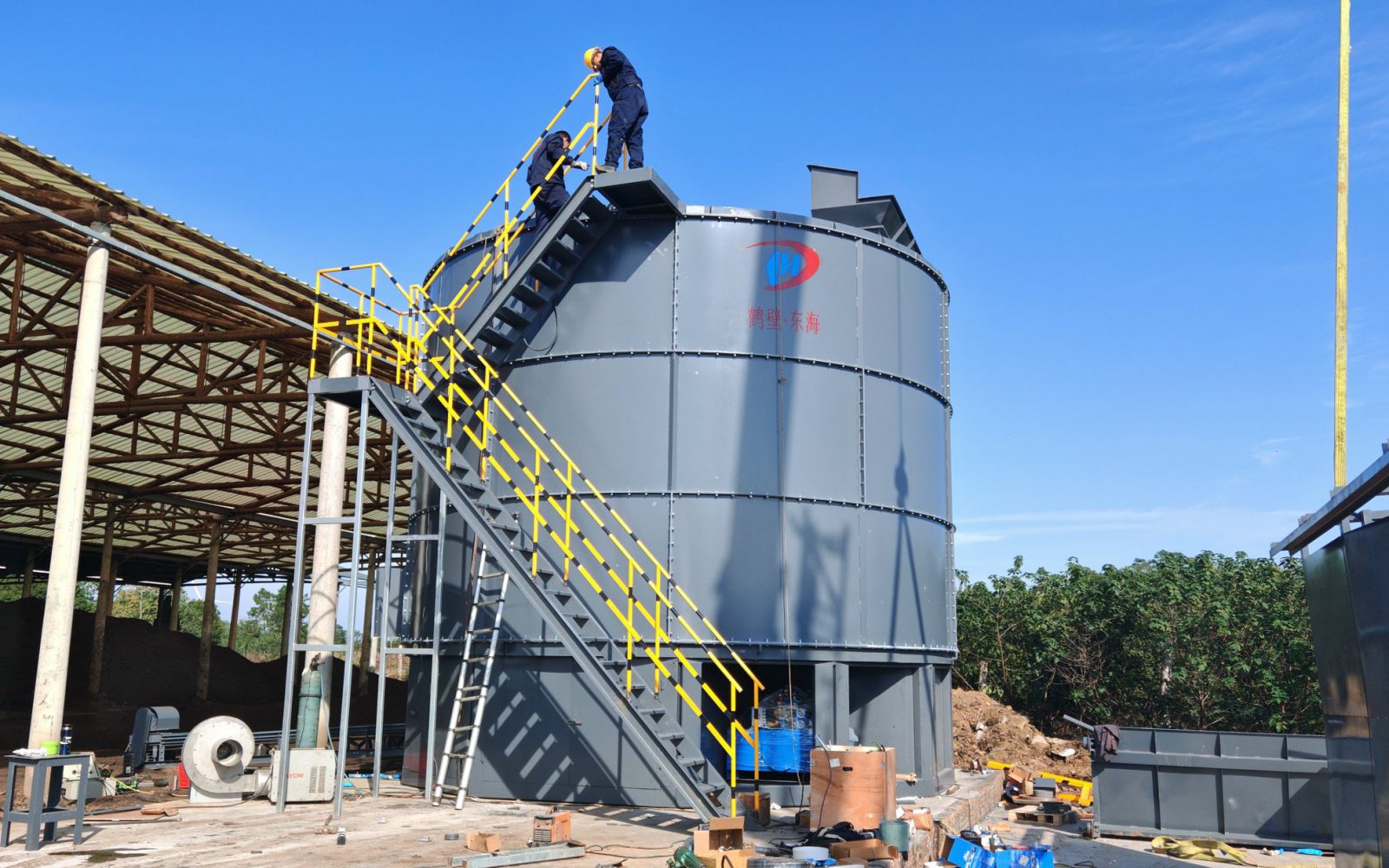
Livestock Manure Treatment Line
An on-farm line that receives manure, stabilises it in-vessel and discharges material that can be stored, sold or land-applied.
- Reception and blending matched to the farm's manure handling
- In-vessel fermentation sized to daily manure output
- Layout for canopy or open-air installation
Overview
Manure is the feedstock Donghai knows best. A treatment line starts at reception, where manure and slurry are received and blended to a workable consistency, and ends with a stabilised material that is easier to store, transport and use.
The fermentation stage is an in-vessel system sized to the farm’s daily output. Depending on the site, the line is installed under a canopy or in the open, with the access platform and loading arrangement laid out around the equipment the farm already uses.
Odour is the decisive issue on most farms. The line can include the waste-gas deodorisation stage patented by Donghai, so the treatment train is designed as one system rather than assembled from separate suppliers.
We size the line from the number and type of animals, the manure handling method and the way the output will be used. Tell us those three things and the configuration follows.
Key design points
- Reception and blending matched to the farm's manure handling
- In-vessel fermentation sized to daily manure output
- Layout for canopy or open-air installation
- Integrated odour treatment option
- Output suitable for storage, sale or land application
Scope of supply
- Reception and blending equipment
- In-vessel fermentation unit
- Aeration and turning equipment
- Discharge arrangement
- Odour treatment stage when specified
- Layout drawing, operating documentation and installation guidance
Applications
Project inquiry
Request a quote for the Livestock Manure Treatment Line
Include the feedstock, the daily tonnage you need to process and the site location. We will reply with a configuration and scope of supply.
Related
Other systems in this range
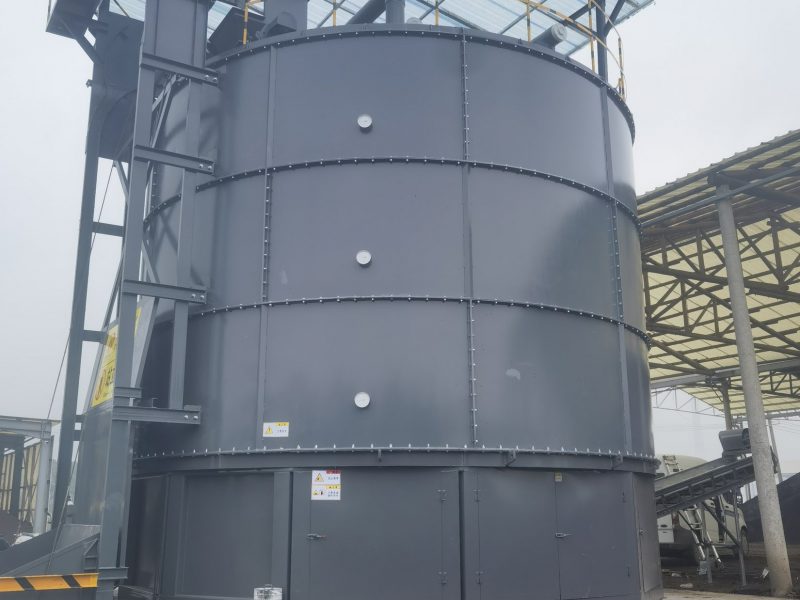
In-Vessel Fermentation
Vertical In-Vessel Aerobic Fermenter
A closed vertical vessel that stabilises organic waste in a controlled aerobic environment, with odour treatment in the same footprint.
View system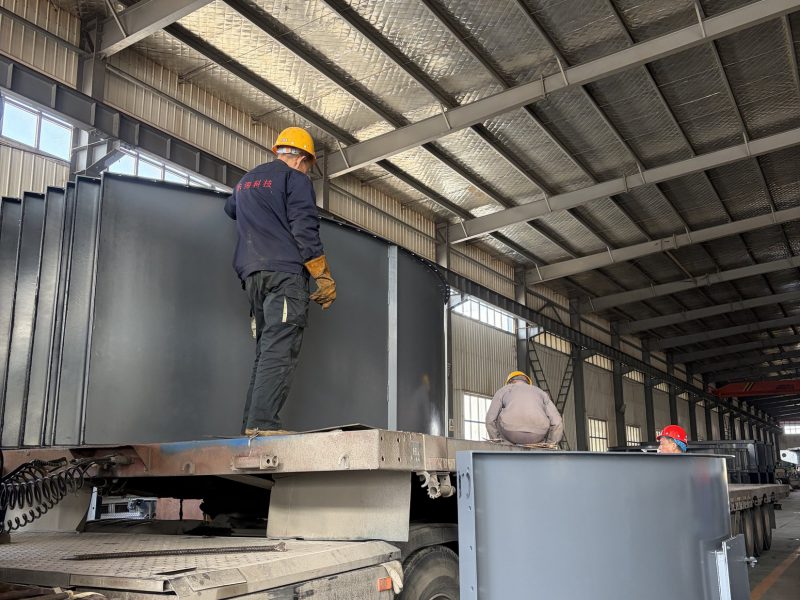
In-Vessel Fermentation
Horizontal Rotary Drum Aerobic Fermenter
A horizontal drum for aerobic stabilisation, delivered as a complete assembly and installed at ground level.
View system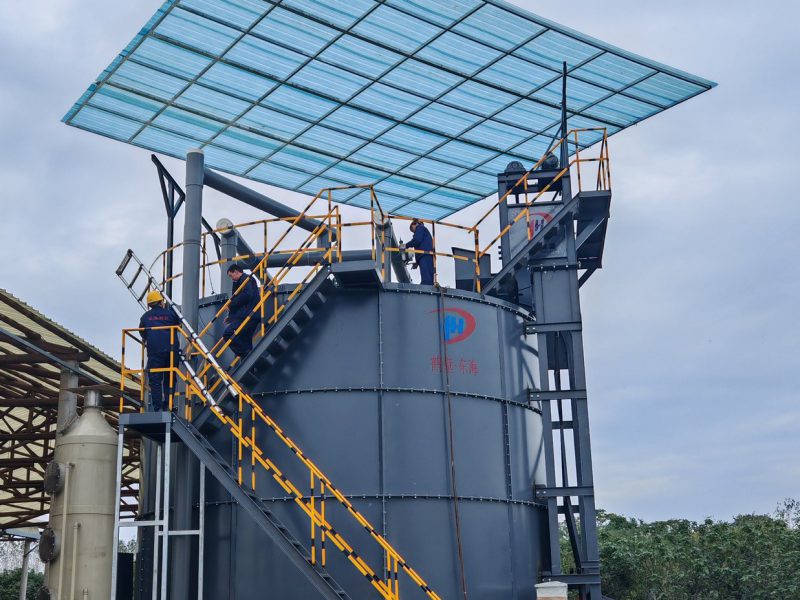
Organic Waste Processing
Food Waste Aerobic Digestion System
A contained digestion system for source-separated food and kitchen waste, with odour control built into the layout.
View system